
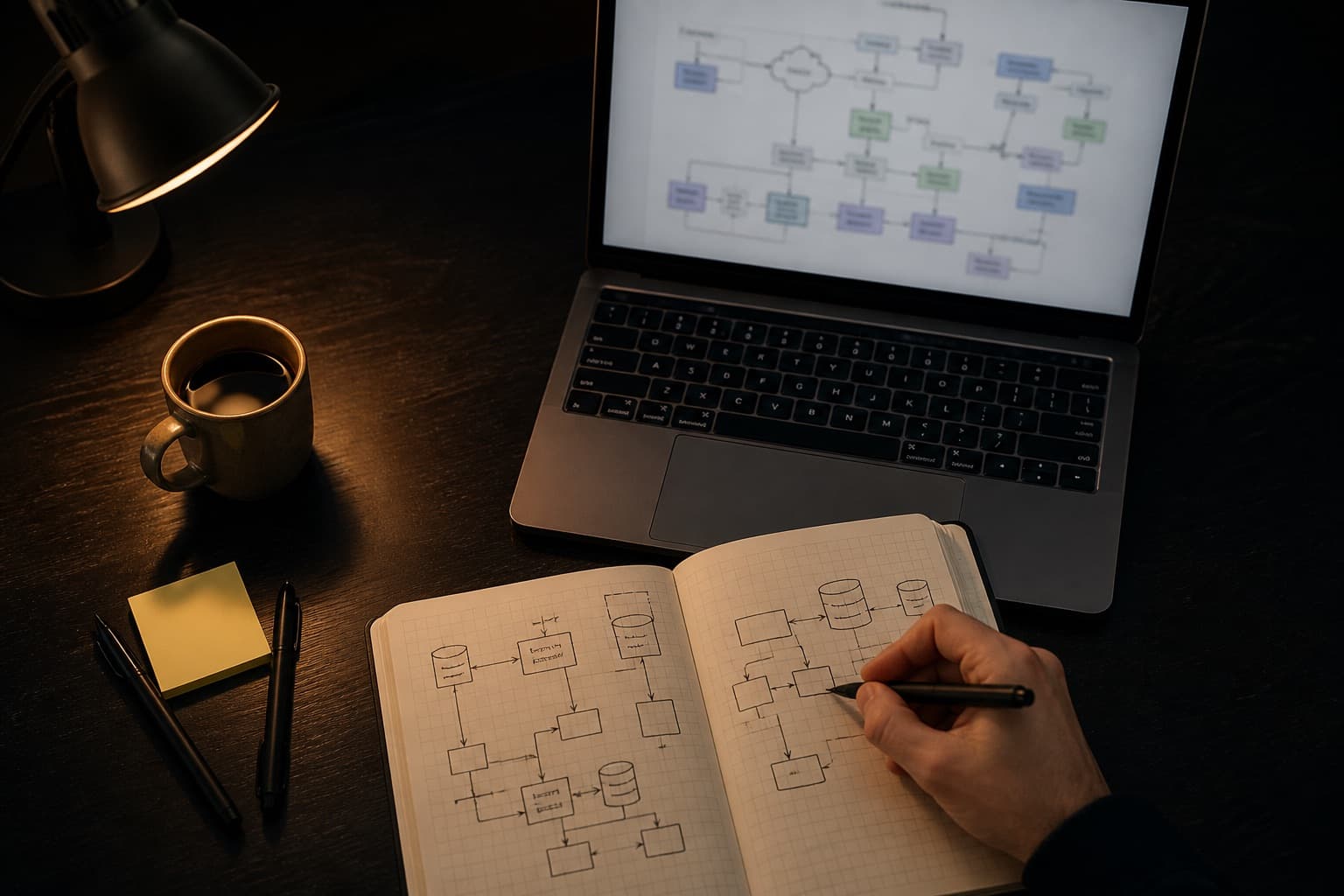
A system design interview is not an art contest. Interviewers are not grading whether your boxes are pretty. They are grading whether you can hear a vague product, ask what matters, draw a shape that could work, and defend the tradeoffs when they change the constraints. Candidates who decorate the board in silence lose to candidates who talk through a messier diagram.
The first two minutes decide more than people think. Restate the problem. Who uses it, how many of them, what “down” means, what you are optimizing for. If they correct you, you just saved the next half hour. If they nod, you now have a shared picture. Jumping into a cache before you have agreed on read versus write is how strong engineers look junior.
Prompts in these rounds are often a paragraph plus a “feel free to assume.” That is a lot to hold while you also draw. Screenshot the brief with the ViewUpAI live assistant so the constraints stay on your side of the glass. The assistant reads what is on screen and folds it into talking points — capacity, latency, a consistency note you were about to skip. Use that as a checklist. You still choose the design. You just stop dropping the sentence that said “messages can be delayed but not lost.”
Narrate while you draw. Name the client, the entry point, the store, the thing that will break first. When you change your mind, say so. Silence plus boxes looks like panic even when you are fine. A short “I am going to make the feed eventually consistent so writes stay cheap, and I will call that out” keeps them with you. If a caption catches a new constraint they added mid-stream, glance, then put it on the board out loud.
Practice the shape before the loop. A technical or mixed mock interview will not replace a full design hour, but it will make you say a plan out loud and then read coach notes about what you skipped. Most people skip the failure case, the back-of-the-envelope numbers, or the sentence about what they would not build yet. Those are the sentences interviewers wait for.
On the real call, Private mode stays on. When you share the whiteboard or the doc, they should see your boxes, not the overlay. You glance at a talking point if you stall. You do not read an architecture from the assistant. If the suggestion offers a trendy component you cannot defend, ignore it. A simpler design you can explain will beat a fashionable one you cannot.
End by walking the path of a single request, then the path of a failure. That is how they know you were designing a system and not a slide. If time is short, say what you would do next. Interviewers like candidates who can stop. They do not like candidates who keep adding boxes because the silence feels dangerous.
ViewUpAI will not design the system for you, and it should not. It keeps the prompt in front of you, captions a fast follow-up, and stays invisible on their screen. You do the talking. That is the round: a conversation about tradeoffs, with a board as the shared notes — not a decoration you hide behind.