
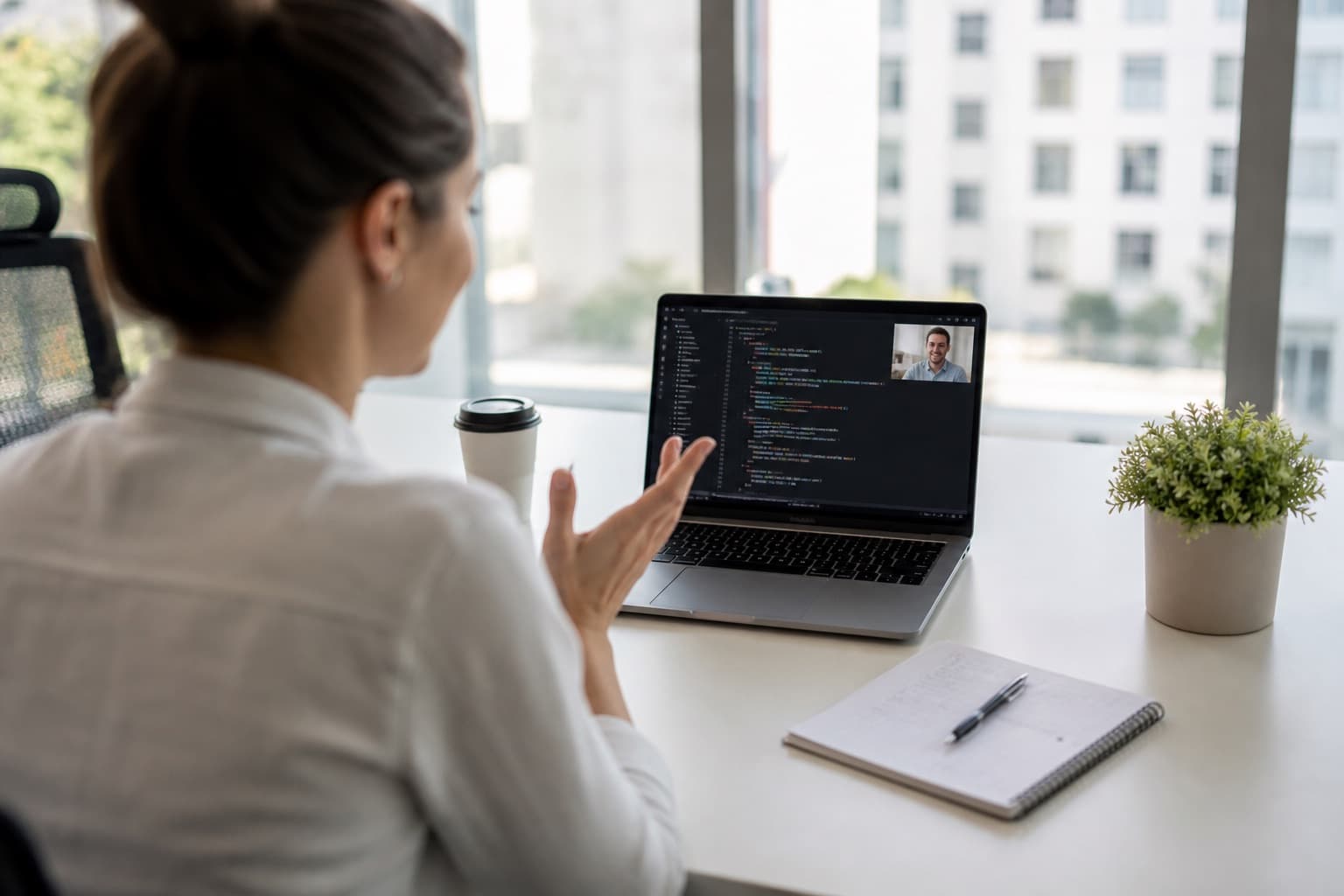
A coding interview is a conversation about a problem that happens to live on a screen. Candidates who jump into syntax before restating the constraints sound rushed. Candidates who narrate the prompt sound like teammates. The round is often decided in those first two minutes, long before anyone argues about big-O.
The usual failure is not “I forgot the algorithm.” It is “I skimmed line four.” A limit, an example, a note about duplicates, a sentence that says the input can be empty — those details vanish the moment you start typing. Then you build a clean solution to the wrong problem, and the interviewer has to decide whether to rescue you or let the clock run.
Say the problem back before you touch the editor. Out loud: what is given, what is asked, what “done” looks like, and which edge cases would change the approach. If they correct you, that is a gift. You just saved twenty minutes. If they nod, you now have a shared picture, which is what a good pairing session feels like.
Dense prompts do not fit in working memory. Take-home style paragraphs, API snippets, and design-tinged coding briefs are built to overflow. This is when a screenshot helps more than another reread. Capture the screen with the ViewUpAI live assistant. The assistant reads what is there and folds the constraints into the next talking points, so you can stay in the shared editor instead of rewriting the spec in a sidebar you will forget to look at.
Use those talking points as a checklist, not as code to paste. You still write the solution. You still explain the tradeoff. You just stop dropping the requirement that was sitting in the prompt the whole time. If the suggestion mentions an edge case you had not said yet, say it. If it offers an approach that is not yours, ignore it and keep the plan you can defend.
Talk while you work. Interviewers are grading the path as much as the function. Name the data structure you are reaching for and why. When you change your mind, say so. Silence plus furious typing looks like panic even when you are fine. A short “I am going to handle the empty case first, then the happy path” keeps them with you.
If you have not practiced this shape, the live overlay will feel like one more panel on an already crowded screen. Run a technical mock interview first. Hear a problem out loud. Answer out loud. Then read the coach notes and the sample answer. You will see whether you skip the restatement, whether you vanish into implementation, whether you never check an example. Fix those habits in practice so the real call is not the first time you try to think and talk at once.
On the day itself, keep Private mode on. When you share the editor, they should see your code, not the assistant. Glance at a caption if the interviewer adds a constraint mid-stream. Glance at the screenshot if the prompt is long. Then look back at the work and keep narrating. You will look like someone who read the prompt. In a surprising number of loops, that is most of the round.
None of this replaces knowing your craft. It replaces the sloppy first minute that makes strong people look unprepared. Read it. Say it. Capture it if it is dense. Then write the thing you just agreed to build.